
Plan the transition, not just the channel
A phone conversation and a visit can concern the same home while living in different tools. The risk is losing the question, repeating a discussion, or arriving without knowing what was actually arranged.
Before changing channels, decide why the next step is useful. A requested visit to answer a service question is different from an unarranged stop in a neighborhood. Keep the person's stated preferences and your organization's operating rules part of that decision.
Use the property record as the point of continuity
Open the saved home and read its recent Activity before a call or visit. Look for the last actual interaction, unresolved questions, and any relevant next-step arrangement. Check the address carefully so nearby homes do not acquire each other's context.
PixelKnock keeps the manual notes and outcomes with the home. You use your own phone or dialer for calling. Your calendar and routing tools handle their respective jobs; a property note does not automatically place a call, plan a route, or confirm an appointment.

Prepare a short before-and-after checklist
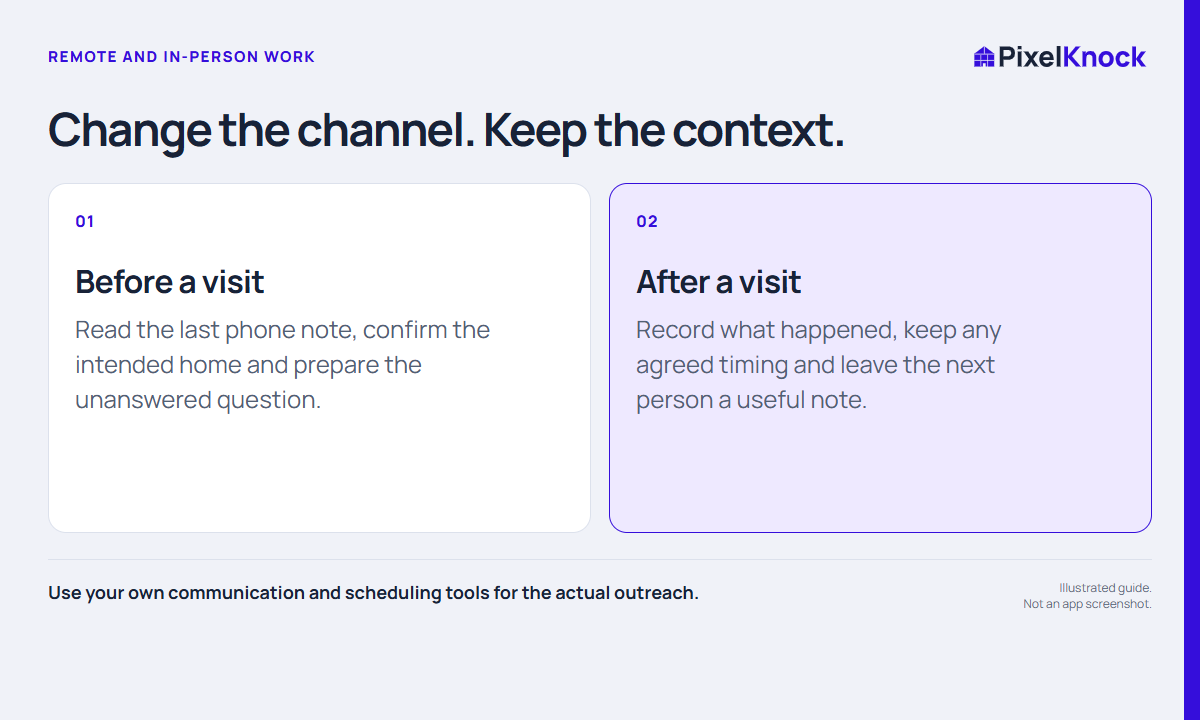
| Before the next interaction | After the interaction |
|---|---|
| Confirm the correct home and relevant contact context | Record what actually happened at that home |
| Read the last question or arrangement | Note the answer or what remains unresolved |
| Check the appointment or contact arrangement in its owning tool | Update that arrangement where it is managed |
| Decide what a useful next step would be | Save the next agreed step without overstating interest |
Keep the checklist short enough to use in the field. A detailed record that nobody updates is less useful than a few accurate sentences saved at the right home.
Write the bridge between sessions
A fictional note after a phone conversation might say: “Asked to discuss service options at the planned visit. Confirmed arrangement in our calendar. Bring the service-boundary information; no purchase decision discussed.”
After the visit, replace the open question with what happened: “Reviewed the boundary information. Needs to consider the service options; no next appointment agreed.” These examples demonstrate continuity, not a recommended sales sequence or an actual customer outcome.
If no interaction occurred, record that plainly. Do not turn an attempted call or unanswered visit into a conversation outcome.
Resume from the record instead of memory
At the next desk session, reopen the saved homes from the field work and check that the notes explain the next decisions. For a team handoff, confirm responsibility through your team's process and make sure the receiving teammate has appropriate workspace access.
The useful result is a coherent history at the home. It helps you avoid restarting from memory when the work moves from the map to your phone, into the field, and back again.