
Separate visibility from responsibility
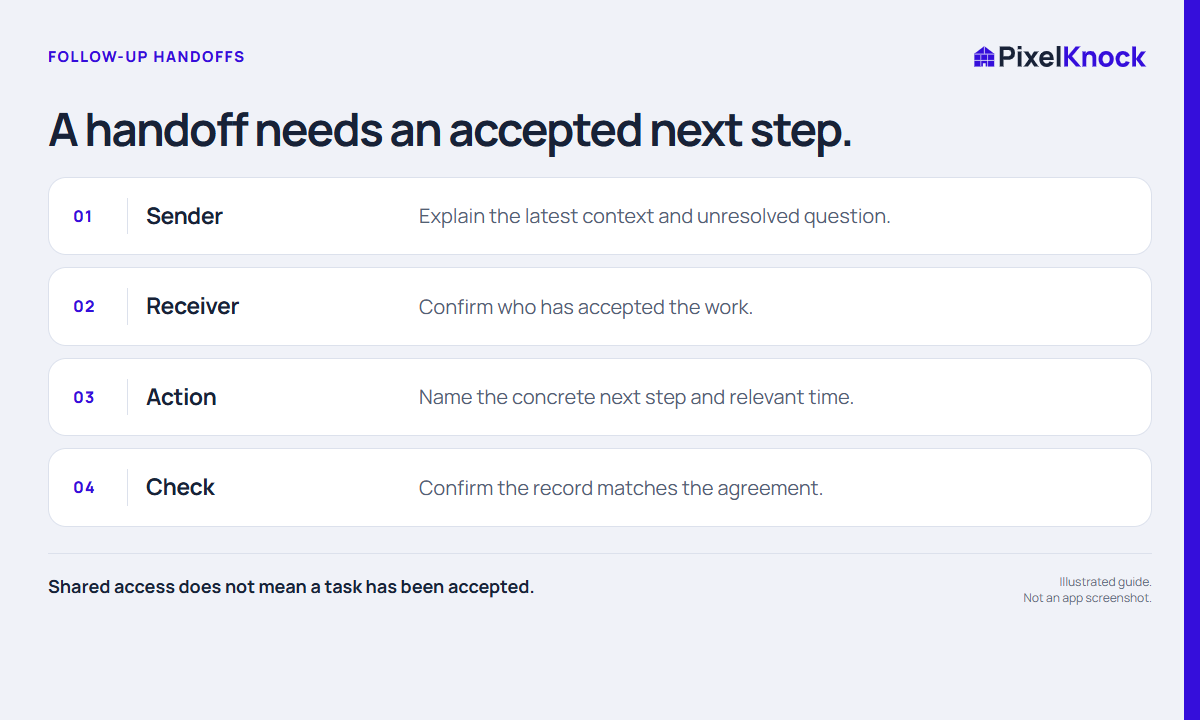
A teammate may be able to read a saved home without knowing you expect them to act on it. “It is in the CRM” describes where information lives, not who has accepted the next step. Make that agreement explicit through your normal internal communication process.
Before handing off, decide whether the task is preparation, a requested callback, a visit or a question for someone else. Those actions need different context. A vague instruction to “follow up” can produce duplicate work or leave both people assuming the other has handled it.
Agree three things before the handoff
Name the person, the action and the relevant time. Confirm acceptance rather than treating a name typed into a note as an automatic assignment. PixelKnock’s shared property record holds the context; it does not automatically notify or assign a named teammate from note text.
If a homeowner has agreed to a callback or appointment, keep the actual arrangement in the property’s schedule. An internal preparation deadline is a separate commitment. Make that difference clear so an internal task is not mistaken for permission or an appointment.

Write a handoff the receiver can use
A fictional example:
Handoff agreed with the receiving rep through our team channel. Next action: confirm available visit windows before Thursday’s requested callback. The homeowner has not chosen an appointment. Latest question and schedule are in this record.
| Handoff element | Check |
|---|---|
| Property | Both people mean the same home |
| Current context | The latest note and outcome are understood |
| Responsibility | The receiver has actually accepted |
| Next action | The work is specific and feasible |
| Timing | The internal deadline and homeowner arrangement are distinct |
Do not claim acceptance in the note until it has happened. If the receiver cannot take the work, record the unresolved ownership issue rather than leaving a misleading completed handoff.
Close the loop on the result
The receiving person should add the actual result after the work, including any changed next action. If a schedule moves, keep the property and any external calendar consistent. The original sender can then see what happened without reconstructing the exchange from messages.
During a team review, look for records with a clear next action but no accepted owner in your operating process. Resolve that gap directly. The objective is continuity of responsibility, not more handoff notes or a false appearance of automatic task management.