
Make the handoff about the next action
A useful handoff tells the next person what they need to do and why. It is more specific than forwarding an address or saying “follow up with this one.” Start with the exact property and the current reason for returning to it.
The person receiving the work may not have heard the original conversation. Assume they need enough factual context to prepare without reconstructing it from several separate messages. Keep the note focused on the business task rather than a long narrative about the rep’s day.
Assemble a four-part packet
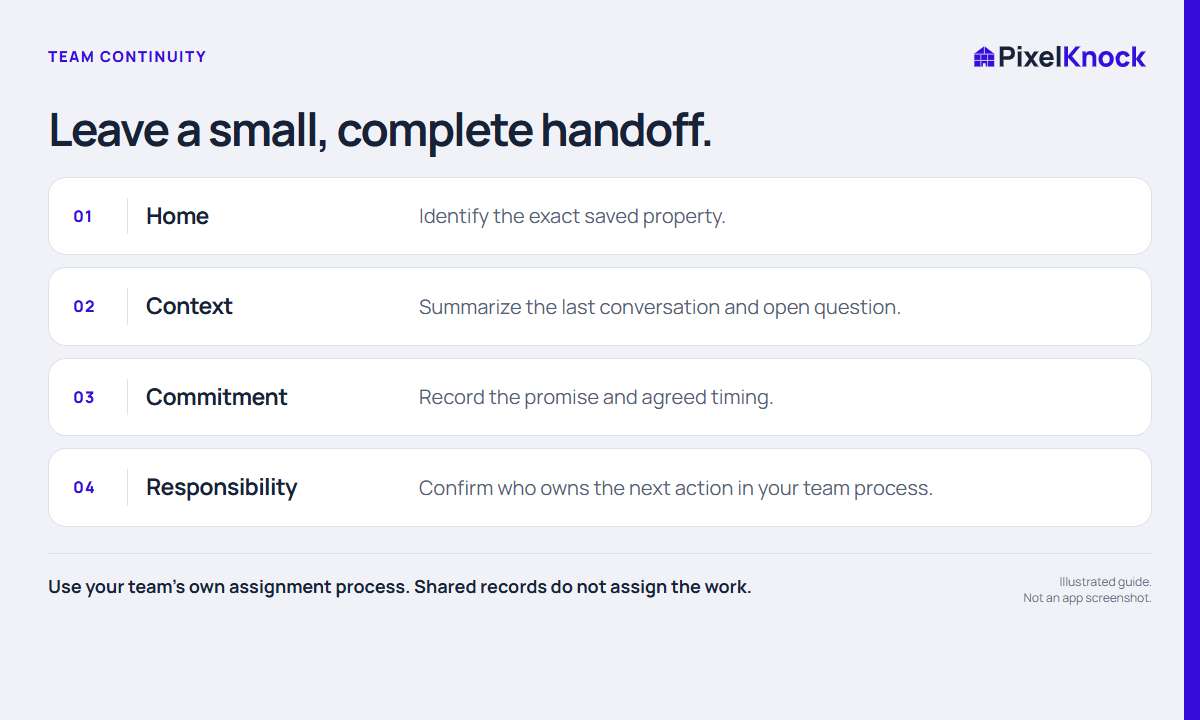
- Home: Identify the exact saved property, including a unit or other distinction when relevant.
- Context: State the latest conversation or attempt and the question still open.
- Commitment: Record what was promised and any timing that was actually agreed.
- Responsibility: Confirm who will take the next action using your team’s assignment process.
The packet can be a short note. Its completeness comes from answering the questions, not from filling a full page. If there was no conversation, say so. If the contact identity is unclear, keep that uncertainty visible.
Compare a fictional handoff
“Good lead, please call” leaves the next person to guess what happened. A more useful version is: “Homeowner asked whether our service covers the rear section. Scope not confirmed. I said we would check before returning. Jordan will handle the next step after confirming the service details.”
This example is fictional. It shows how to preserve a question and an unfinished promise without turning them into a qualification or a sales result. The handoff should also follow your team’s actual process for confirming responsibility.
Check what the next teammate can see
PixelKnock’s shared workspace makes saved property notes and history available to teammates with the appropriate access. Roles determine whether a person can manage, edit or view records. Check that the receiving teammate can open the relevant saved home before relying on the record for a handoff.
Shared access does not automatically assign ownership, reserve a property or prevent overlapping outreach. Use the team’s established coordination process for those decisions. Keep the call, message and reminder in the communication and scheduling tools responsible for them.

Close the loop after the handoff
Ask the receiving teammate to identify the next action from the record. If they need an explanation that is missing, add the useful context before the handoff is considered complete. Avoid relying on a private message as the only place where the promise is recorded.
After the next attempt, record what happened in the property history. That keeps the handoff connected to the resulting work and gives the team a clearer place to begin the following conversation.